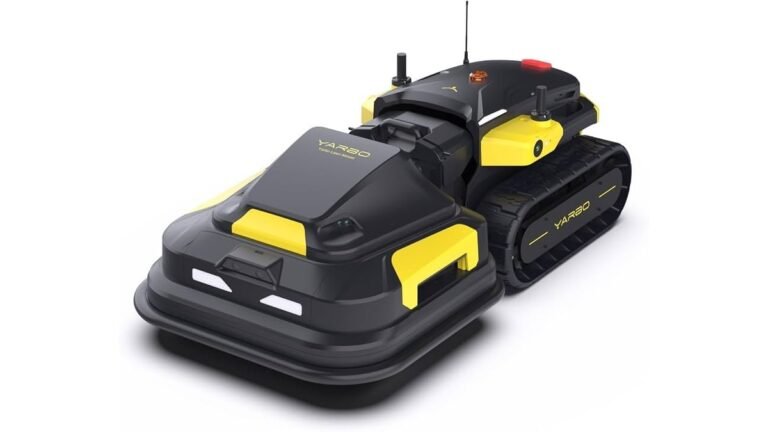

Robotic Mower for Rental Property: Setup and Tenant Guide
A robotic mower for rental property can work well, but only if you treat it as shared equipment, not a personal gadget. Expect to spend 1-2 hours on setup, set a low cutting height of about 2-3 inches, and plan for a boundary wire or a GPS fence. This guide covers setup, settings, tenant handover, and when a mower is the wrong call.
What a robotic mower actually is

A robotic mower is a battery-powered machine that cuts grass on its own, following a boundary wire buried in the lawn or a GPS map you draw in an app. It runs on a schedule, returns to a charging dock, and cuts a little at a time instead of all at once.
For a rental, it’s less a tool and more a shared appliance. You buy it, you install it, and someone else — your tenant — lives with it every day. That shapes every decision about how you set it up.
The common misconception is that you can install it once and forget it. In a rental, the mower has to survive tenant changes, pets, kids, and people who’ve never seen one before.
One rule is certain: most models stop cutting when lifted off the ground, because a lift sensor stops the blades. That’s a safety feature, not a fault.
How to set up a robotic mower for a rental
- Measure the lawn first. Walk the yard and note the size in square feet. Most residential models cover roughly 0.25 to 0.5 acres, but check the maker’s spec sheet — coverage depends on how many hours a day it runs.
- Pick the boundary type. A buried wire costs more in time and labor; a GPS or virtual fence needs no digging but works best with a clear sky view. Choose based on your yard, not the price tag.
- Set the cutting height to 2-3 inches. Start at the top of that range in spring, then lower it slowly. Cutting more than one-third of the blade height at once stresses the grass.
- Set a daily schedule. Two to three short runs a day beats one long run. Most apps let you set start times and rain delays.
- Install the dock on level ground. It needs shade and a power outlet within reach. A tilted dock causes docking failures.
- Test the whole loop twice. Run a full cycle, then watch it return to the dock. Fix any gap before the tenant moves in.
- Write a one-page handover sheet. Cover how to pause it, how to clean it, and who to call when it beeps.
The judgement call that matters most is the schedule. Too short, and the grass looks patchy. Too long, and the mower wears out faster and annoys neighbors at odd hours.
If your rental is in a complex with shared grounds, or your local rules restrict outdoor machinery noise, check with the property manager or your city before you install anything.
Key settings at a glance
These are the settings most owners come back to adjust. Times assume a typical suburban yard under 0.5 acres with a mower rated for that size.
| Situation | What to use | How long | What to watch for |
|---|---|---|---|
| Small yard, under 0.25 acres | Daily schedule, 2 runs | About 1-2 hours total | Overlapping passes on tight turns |
| Medium yard, 0.25-0.5 acres | Daily schedule, 3 runs | About 3-4 hours total | Battery charge between runs |
| Spring growth spike | Cutting height 3 inches | Same schedule | Grass clumping, blade drag |
| Summer heat | Cutting height 3 inches | Early morning runs | Dry patches, dull blades |
| Rainy week | Rain delay on | Skip wet days | Ruts in soft ground |
| Tenant with a dog | Boundary wire, no GPS-only | Normal schedule | Pet waste jams the blades |
| Vacant unit | Twice a week | 2 runs each | Theft and battery drain |
What separates a good install from a bad one
Experienced installers spend most of their time on the boundary, not the mower. A wire that’s too close to a flower bed, a driveway, or a fence post causes endless docking errors. They leave a clean 12-18 inches of clearance around the loop and mark it on a simple map for the next person.
They also set the schedule around the tenant, not around the grass. If the tenant works nights, a 7 a.m. run is a complaint waiting to happen. A quiet window in the afternoon works just as well.
The handover matters more than the hardware
A mower that stops working usually stops because nobody knew how to restart it. A short walkthrough — 10 minutes, in person — prevents most service calls. Show the tenant the stop button, the error light, and the app.
What to leave alone
Don’t chase a perfect striped lawn. Rental mowers aren’t for show. Keep the blades sharp, keep the dock clean, and let it run. Fiddling with settings every week causes more problems than it solves.
Common problems and quick fixes

| What you notice | What it usually means | What to do first |
|---|---|---|
| Mower stops mid-lawn | Lift sensor triggered, or low battery | Place it back down, check the charge |
| Won’t return to dock | Boundary wire break or dirty contacts | Clean the dock contacts, walk the wire |
| Uneven cut | Dull blades or schedule too short | Replace blades, add one more run |
| Error light flashing | Blocked blades or a stuck wheel | Turn it off, clear grass and debris |
| Tenant says it’s “broken” | They pressed pause or stop | Walk them through the restart |
Most “broken” calls are user error, not hardware failure. A quick phone call solves it.
The rules that apply
Safety standards for robotic mowers come from the International Electrotechnical Commission, which publishes IEC 60335-2-107 for robotic battery-powered lawnmowers. That standard covers blade-stop sensors, lift detection, and child safety. If you’re buying, ask the seller which standard the model meets.
For US buyers, the Consumer Product Safety Commission handles recalls — check its site before you buy a used unit. Some homeowners associations and city noise ordinances limit outdoor machinery hours, so check your local code. If your rental is part of a larger complex, the property manager may need to approve any outdoor equipment. Wiring a boundary loop near buried utilities is a job for a licensed electrician, not a weekend project.
Keeping it running between tenants
After each tenant moves out, clean the dock contacts, check the blades for nicks, and clear grass from the underside. Store the mower indoors in winter — most makers say not to leave the battery in freezing temperatures, so check your model’s manual for the exact storage range.
Between runs, the mower mostly looks after itself. The sign it needs attention is simple: a ragged cut edge or a mower that docks late. Replace blades when the cut looks torn, not on a fixed calendar.
When a robotic mower isn’t the right choice
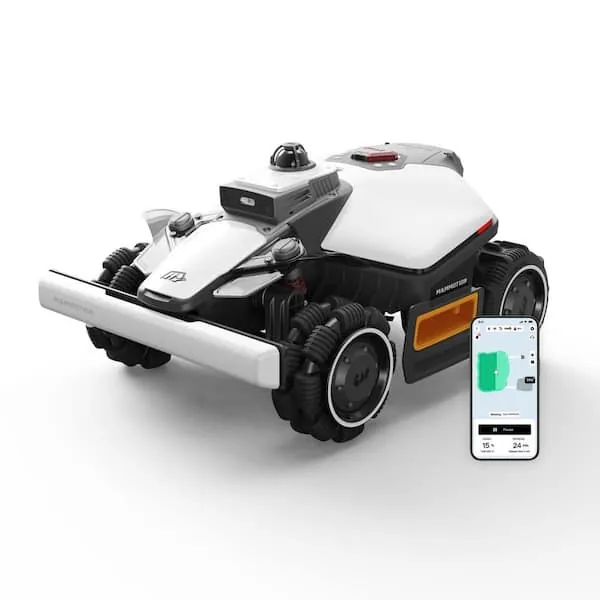
Skip it if your tenant won’t engage with technology at all — a push mower and a lawn service cause fewer headaches. Skip it if the yard has steep slopes over 25 degrees or heavy landscaping, because most models struggle there.
Skip it if your lease is short-term or the unit turns over every few months. Setup time and handover effort don’t pay off in under a year. In those cases, hire a lawn service and fold the cost into rent.
Frequently asked questions
Can a tenant refuse to have a robotic mower on the property?
Yes, if the lease doesn’t mention it. Add a clause about outdoor equipment before you install one. Without it, a tenant can ask you to remove it.
How long does setup take?
About 1-2 hours for a small yard with a GPS fence, and 3-5 hours if you bury a boundary wire. Larger or complex yards take longer.
Is it safe around kids and pets?
Generally yes, because lift sensors stop the blades when the mower is picked up. Still, keep children supervised and check the maker’s safety guide.
What happens if the tenant moves out mid-season?
The mower keeps running on its schedule. Reset the app to your account, update the handover sheet, and brief the new tenant.
How often does it need maintenance?
Check blades monthly during growing season and clean the dock every few weeks. Replace blades when the cut looks torn rather than on a fixed date.
Does it work in winter?
No. Most makers advise storing it indoors when temperatures drop near freezing. Check your model’s manual for the exact storage range.
Who fixes it if it breaks?
The manufacturer’s warranty usually covers hardware for the first year or two. After that, a local dealer handles repairs. Keep the receipt and serial number.
Conclusion
A robotic mower can cut your lawn-care costs and keep a rental looking tidy, but it only pays off when the tenant is on board and the yard suits the machine. Get the setup right, hand it over properly, and it runs quietly in the background for years.

Daniel Carter is a home improvement specialist and tool researcher with years of experience studying power tools, hand tools, workshop equipment, outdoor gear, and DIY projects. At HomeToolWorld, he researches products, compares features, reviews manufacturer specifications, and creates practical buying guides to help homeowners, DIY enthusiasts, and professionals make informed decisions. His goal is to provide accurate, easy-to-understand, and trustworthy content based on careful research and real-world applications.