
Robotic Lawn Mower for Seniors: What Works and What Doesn’t
Yes, a robotic lawn mower can work well for many seniors. It works best if the yard is flat, under about half an acre, and has a boundary wire or a mapped zone the mower can learn. If your lawn fits that shape, the mower cuts on its own and you don’t push anything. If it doesn’t, a lightweight push mower or a lawn service is the safer buy.
When a robotic lawn mower fits seniors’ yards

A robotic mower suits a yard with a clear edge, a flat surface, and no steep drop. On that kind of lawn, it cuts little and often, so you never handle clippings or push a heavy machine. On a rough or sloped yard, the same mower gets stuck, misses patches, or needs a hand to rescue it — which defeats the point.
| Your situation | Answer | Why |
|---|---|---|
| Flat lawn, under ½ acre | Yes | One mower covers it in a day |
| Yard with a boundary wire already | Yes | Setup is quick and simple |
| Very small yard, under 1,000 sq ft | Maybe not | A push mower is cheaper |
| Lawn split by a path or fence | Yes, with a guide wire | Mower needs a route home |
| You want no app or phone setup | No | Most models need an app |
| Yard with pets or small children | Yes, with care | Blades stop on lift, but watch it |
Check your mower’s manual for its own stated limit before you buy.
What really decides if it works for you
The size and shape of your lawn decides almost everything. A robotic mower is built to cut a small area often, not a big area fast. If your lawn is bigger than the model’s rated coverage, it runs all day and still leaves patches. If your lawn is small and simple, a basic model finishes in a few hours and parks itself.
Your lawn’s edges matter just as much. A mower follows a boundary wire or a mapped path, so a yard with a clean, open border is easy. A yard crowded with flower beds, trees, and narrow gaps needs more wire, more time, and more fiddling. That’s the part people underestimate.
Power and docking also decide it. The mower needs a charging station near an outdoor outlet, and the wire or map has to reach every zone you want cut. If you can’t get power to the dock, the whole system stalls.
The last factor is you. If you can bend to place a dock and read a simple app, setup is manageable. If bending or phone use is hard, ask a family member or installer to help on day one.
If your lawn is flat and under the model’s rated coverage, a robotic mower saves you real work; if it’s steep, split, or far past that coverage, it won’t.
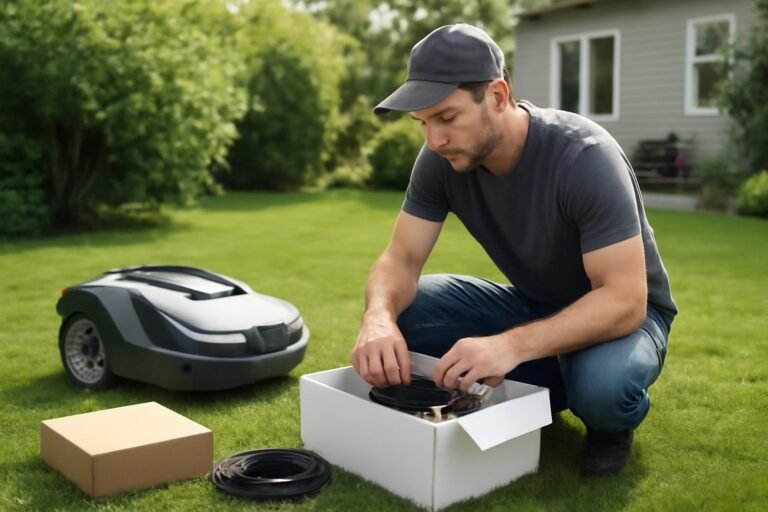
Setting it up so it actually runs

- Pick the right coverage size. Choose a model rated for at least your lawn’s square footage, not less. A mower rated above your lawn finishes faster and stresses less — you’ll see it return to the dock with charge left.
- Place the charging station on flat ground. Put it near an outdoor outlet, on level grass, with clear space in front. The sign it worked: the mower docks itself without help.
- Lay the boundary wire or map the zone. Follow the manual’s spacing for the wire around walls and beds. The sign it worked: the mower turns before it hits an obstacle.
- Set a daily schedule. Run it most days for a short cut rather than one long session. The sign it worked: clippings disappear and the lawn looks even.
- Watch the first three runs. Stay nearby for the first few cuts to spot stuck spots. The sign it worked: it completes a full cycle and returns on its own.
- Add a rain sensor and lift sensor check. Confirm both work before you trust it alone. The sign it worked: it pauses in rain and stops when lifted.
If bending to place the dock is hard, ask someone to set it up once. After that, the mower runs on its own.
The mistake that costs the most
The biggest error is buying a mower rated for less lawn than you have. People see a low price and a small body and assume it’ll manage. It won’t. An undersized mower runs all day, wears its battery faster, and still leaves uncut patches — so you’re back outside with a trimmer, which is exactly what you wanted to avoid.
The cost is time and a second purchase. A mower that can’t finish your lawn often needs replacing within a season or two, and that’s money spent twice. The fix is simple: measure your lawn’s square footage first, then buy a model rated above that number, not at it. Check the maker’s coverage rating on the product page or manual before you pay.
When to stop and call someone

- Your lawn slopes steeply. Most mowers lose traction on steep grades, and a slip on a hill is a fall risk for you too.
- You can’t reach an outdoor outlet. Running power safely to a dock is an electrician’s job, not a weekend task.
- The wire keeps breaking. Repeated cuts mean a buried or damaged line, and tracing it needs a tone generator most homes don’t have.
- Your lawn is over an acre. At that size you need a pro-grade setup or a lawn service, not a consumer unit.
Where the work needs a licensed electrician or a landscape pro, hire one. Don’t run outdoor power yourself if you’re unsure — that’s where injuries and code problems start.
Frequently asked questions
Can a robotic lawn mower work for someone with limited mobility?
Yes, if the yard is flat and the dock is reachable. You still need to place the dock and set the schedule once, so ask a family member or installer to help on day one. After that, the mower runs on its own and you don’t push or lift anything.
Why does my robotic mower keep getting stuck?
It gets stuck for three common reasons: a slope past its rated limit, a narrow gap it can’t turn in, or a boundary wire laid too close to an obstacle. Check the manual’s slope and wire-spacing figures. If the spot still traps it, add a guide wire or block that zone.
How long does a robotic mower take to cut a lawn?
For a lawn near the model’s rated coverage, expect most of a day in short cycles, not one pass. A mower rated well above your lawn’s size finishes in a few hours. The exact time depends on your lawn’s square footage and the model’s cutting width.
Is it safe to leave a robotic mower running near pets?
Most models have a lift sensor that stops the blades when the mower is picked up, and some have obstacle detection. That reduces risk, but it doesn’t remove it. Keep pets and small children away while it runs, and check your model’s safety features in its manual.
What happens if the robotic mower gets rained on?
Most models are built to handle rain and have a rain sensor that sends them back to the dock. Check your model’s water-resistance rating in its manual. If it’s a basic model without a rain sensor, schedule it for dry hours instead.
Does a robotic mower need Wi-Fi or an app?
Many models need an app for scheduling and setup, and some need Wi-Fi for updates. A few basic models use buttons on the mower itself. If phone use is hard for you, look for a model with on-unit controls, or have someone set the app up once.
How often should the robotic mower run?
Run it most days in the growing season, for a short cut each time. Daily short cuts keep clippings tiny, so they break down in the lawn. In slow-growth months, cut back to every other day or less, based on how fast your grass grows.
Does it matter which robotic mower I pick?
Yes. The rated lawn coverage, the slope limit, and the setup type differ a lot between models. Pick one rated above your lawn’s square footage and matched to your slope. Check those two numbers on the maker’s official page before you buy.
Your first step with a robotic mower
Measure your lawn’s square footage and note its steepest slope before you shop. Then buy a model rated above both numbers. Expect the mower to run on its own within a day or two of setup, and you’ll know it’s working when it docks itself with charge left. If it keeps getting stuck, or the slope is past the manual’s limit, stop and call a landscape pro.

Daniel Carter is a home improvement specialist and tool researcher with years of experience studying power tools, hand tools, workshop equipment, outdoor gear, and DIY projects. At HomeToolWorld, he researches products, compares features, reviews manufacturer specifications, and creates practical buying guides to help homeowners, DIY enthusiasts, and professionals make informed decisions. His goal is to provide accurate, easy-to-understand, and trustworthy content based on careful research and real-world applications.