
Robotic Lawn Mower Noise Level: How Loud Is 55 to 60 dB?
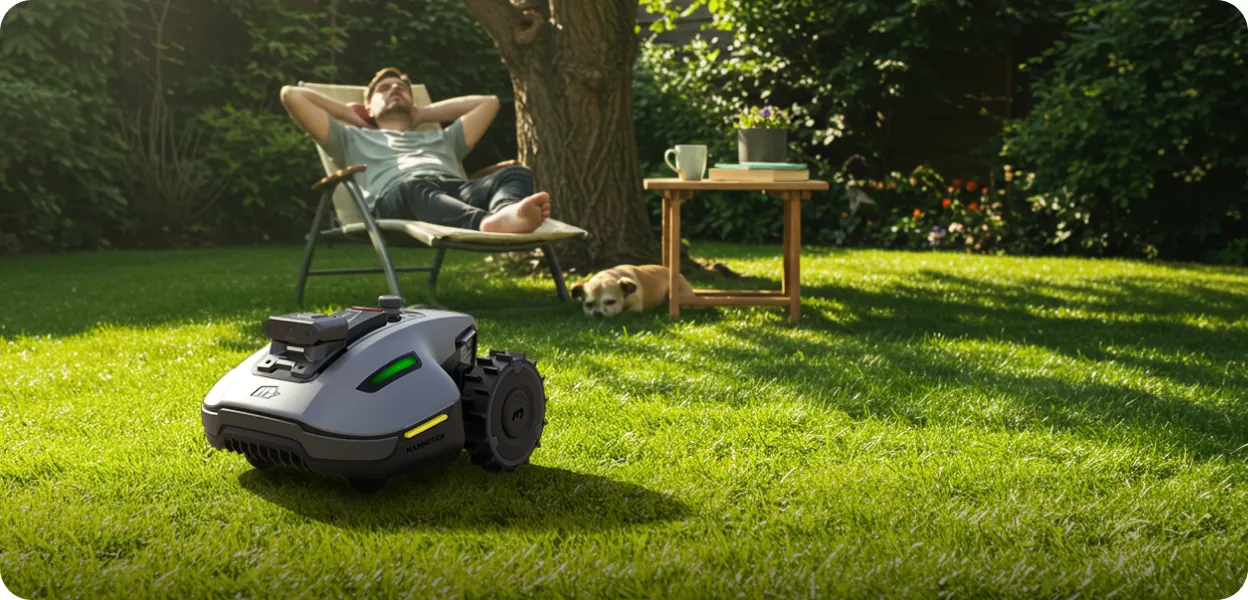
A robotic lawn mower noise level usually sits between 55 and 60 decibels (dB) while it cuts, which is about the sound of a normal conversation or a quiet dishwasher. A gas mower runs closer to 90 dB. The exact number depends on the model and the distance from the mower — step 3 meters away and it drops a few decibels.
The short version
- Most robotic mowers run at 55–60 dB while cutting, measured at 1 meter from the machine.
- Gas push mowers hit around 90 dB — that’s roughly 30 dB louder, which the ear reads as far more than double.
- Distance matters: sound drops about 6 dB each time you double your distance from the mower.
- Quiet models sit near 54–58 dB; the loudest robotic models reach about 62–63 dB.
- A robotic mower still makes noise at night, so check your local quiet-hours rules before scheduling.
- The blade motor drives most of the sound; the drive motor on slopes adds a little more.
Why robotic mower noise levels are lower
The noise comes from a small electric motor spinning a light cutting disc, not from a combustion engine. That’s the whole reason the gap is so wide. A gas engine fires hundreds of small explosions every minute, and each one sends a pressure wave through the air. An electric motor just turns. No exhaust pulse, no cooling fan roaring at high speed.
Electric motors also run at lower power. A robotic mower cuts a little grass often, so it never needs the torque of a gas engine chewing through tall, wet growth. Less power means less vibration, and vibration is what travels through walls and fences.
Blade design adds another layer. Robotic mowers use small, free-swinging razor blades on a disc spinning fast but light. The cutting noise is a soft whir, not the sharp crack you hear when a heavy steel blade hits a thick stem.
If you want the official limits for outdoor equipment in your area, many local councils publish their own rules; the U.S. EPA also sets standards for outdoor equipment noise under the Noise Control Act.
When the answer is different

The 55–60 dB figure assumes a flat lawn, a sharp blade, and a measurement at 1 meter. Change any of those and the number moves.
| Situation | What changes | What to do instead |
|---|---|---|
| Tall, wet grass | Motor works harder, louder | Cut more often, not lower |
| Steep slope | Drive motor adds noise | Schedule for daytime hours |
| Dull or damaged blades | Rattling and vibration | Replace blades every 6–8 weeks |
| Hard surface nearby | Sound bounces back | Keep mower off patios and paths |
| Night operation | Quiet rules apply | Check local bylaws first |
| Older or budget model | Motor and bearings wear | Measure it yourself with an app |
How to keep the noise down
-
Measure your mower where it matters. Stand 3 meters from the mower while it runs and use a free sound-meter app on your phone. Anything under 60 dB at that distance is normal; above 65 dB suggests a problem.
-
Replace the blades every 6–8 weeks in growing season. Dull blades tear grass instead of cutting it, and the extra drag makes the motor strain and whine. Sharp blades keep the sound at its rated level.
-
Clear the cutting disc of stuck grass and twine. A wrapped clump throws the disc off balance. That imbalance shows up as a low rattle, and it gets worse the longer you leave it.
-
Set the schedule for daytime hours. Most robotic mowers let you pick a start time. Run it between 9 a.m. and 6 p.m. on weekdays so the sound lands when neighbors expect garden noise anyway.
-
Check the drive wheels and bearings once a season. Worn bearings make a grinding sound that grows over months. Spin each wheel by hand with the mower off — it should turn smoothly and quietly.
-
Keep the boundary wire tidy. A loose or damaged wire can make the mower stop, reverse, and restart in a loop. That repeated motor surge is louder than normal cutting.
-
Compare against the spec sheet. The manufacturer lists a sound power level in dB(A) in the manual. If your mower sounds much louder than that number, contact the maker’s support line.
-
Add a screen or hedge if the sound carries. A dense hedge between the mower’s zone and a neighbor’s window cuts perceived noise. Plants absorb and scatter sound better than a bare fence.
The mistakes that ruin it

- Running the mower at night to dodge the daytime heat. It’s quieter than a gas mower, but it still hums, and many areas have quiet-hours rules that make night operation a complaint waiting to happen.
- Ignoring a new rattle for weeks. A small imbalance wears the bearings faster, and a bearing replacement costs more than a set of blades.
- Judging the noise from inside the house. Walls block high frequencies, so the mower sounds quieter indoors than it does in the yard. Step outside and listen from the boundary line.
- Cutting grass that’s too long. The motor bogs down, the sound spikes, and the cut comes out uneven. Take it in stages instead.
- Assuming every model is equally quiet. The gap between the quietest and loudest robotic mowers is about 8 dB — enough to notice from a next-door patio.
Related guides
Frequently asked questions
How loud is a robotic lawn mower in decibels?
Most models run at 55–60 dB at 1 meter, with the quietest near 54 dB and the loudest around 62–63 dB. That’s roughly the sound of a normal conversation. Check your model’s manual for its rated sound power level, since that’s the figure the maker stands behind.
Can you hear a robotic lawn mower through a wall?
You can hear a faint hum through a single wall or closed window, but it’s much softer than outdoors. The high-pitched motor sound gets absorbed by the wall, so what’s left is a low whir. Double glazing usually hides it completely.
Is it safe to run a robotic mower at night?
It’s safe for the machine, but not always allowed. Many towns and homeowners’ associations set quiet hours, often between 10 p.m. and 7 a.m. Check your local rules before you schedule night cuts. The mower itself has sensors and lights for low light, but the noise can still bother neighbors.
Why is my robotic mower louder than it used to be?
Worn or dull blades are the most common cause, followed by grass wrapped around the cutting disc. Both make the motor work harder. Replace the blades and clear the disc, then listen again. If the noise stays, the bearings may need service.
How often should I replace robotic mower blades?
Every 6–8 weeks during the growing season for most lawns, or sooner if you cut tough grass. Blades are cheap and swapping them takes a few minutes. Sharp blades cut cleaner, use less power, and stay quieter.
Does a robotic mower use more electricity than a gas mower uses fuel?
It uses far less energy overall. A robotic mower charges from a low-power dock, and the battery holds enough for a full cut. A gas mower burns fuel every time you start it. The trade-off is that the robot cuts more often, so it runs more total hours.
What happens if my mower is louder than the manual says?
First check the blades and the cutting disc for damage or stuck debris. If those are clean and the noise stays, contact the manufacturer’s support. A sound level well above the rated figure usually points to a bearing or motor fault that needs a technician.
Does the noise level change with the height setting?
Yes, a little. A lower cut means the motor works harder against more grass, which adds a decibel or two. A higher cut leaves more blade exposed and can sound slightly sharper. The difference is small, usually under 3 dB.
Conclusion
A robotic mower won’t vanish from your yard’s soundscape, but at 55–60 dB it sits in the same range as a conversation, not a power tool. Keep the blades sharp, run it in daylight, and check your local quiet hours — that’s most of what decides whether the neighbors ever notice it.

Daniel Carter is a home improvement specialist and tool researcher with years of experience studying power tools, hand tools, workshop equipment, outdoor gear, and DIY projects. At HomeToolWorld, he researches products, compares features, reviews manufacturer specifications, and creates practical buying guides to help homeowners, DIY enthusiasts, and professionals make informed decisions. His goal is to provide accurate, easy-to-understand, and trustworthy content based on careful research and real-world applications.