What Size Robotic Lawn Mower Do I Need for Your Yard?
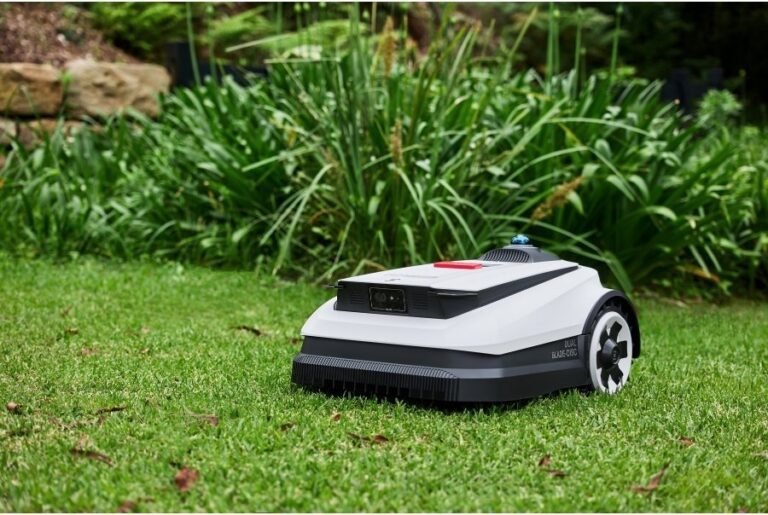
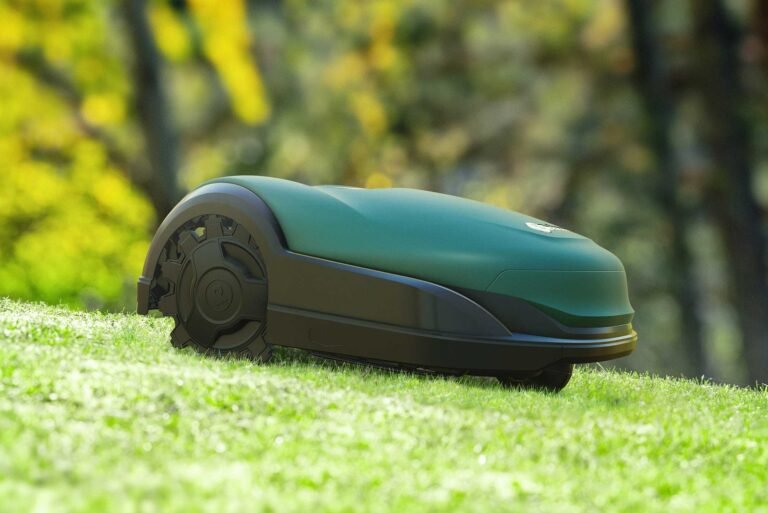
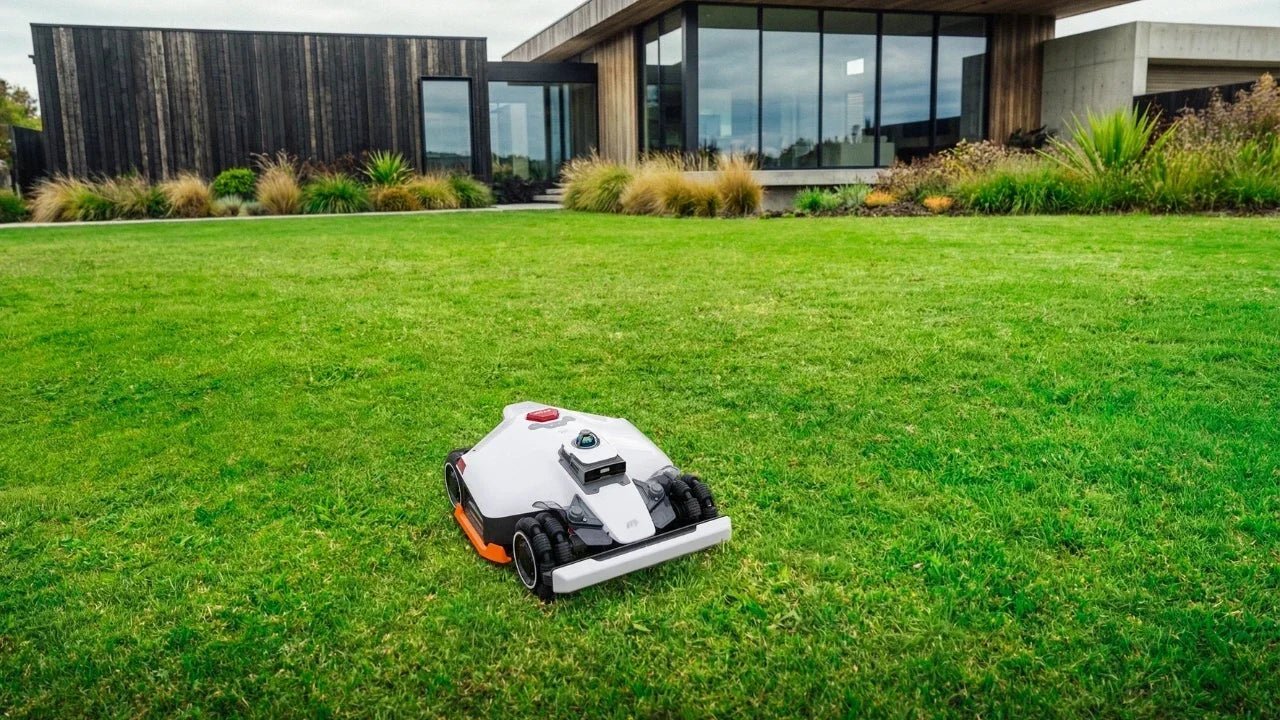
For most lawns, you need a robotic mower rated for an area about 20-30% larger than your actual lawn. So a 0.2-acre (800 m²) lawn calls for a mower rated at 0.25-0.3 acres. That buffer covers obstacles, slopes and shading. If your lawn is flat and open with no trees, a mower rated at your exact size can work.
Quick sizing guide for a robotic mower

- Work out your actual lawn area first, not your whole plot. Measure the grass, then subtract the house, driveway, beds and shed.
- Add 20% for a flat, open lawn, and 30% or more if you have slopes, trees, narrow strips or several separate zones.
- Check the rated area per day, not just the headline number. Two mowers can share the same “max area” but cut a different amount in 24 hours.
- Match the cutting width to your gates. A mower with a 9-inch (22 cm) body needs a gap of roughly 28 inches (70 cm) to pass with its boundary wire.
- Slopes change everything. Most models handle up to about 35% (around 19°), and a few reach 45%. Check your model’s own spec sheet.
- Battery run time sets the daily area. A mower that runs 60 minutes then charges 60 minutes covers far less than one that runs 90 and charges 45.
Why the rated area isn’t your lawn size
The rated area on the box assumes the mower runs almost all day, every day, on flat ground. Manufacturers test in open conditions with few obstacles, so the number you see is a ceiling, not a promise. Your lawn has corners, trees, a swing set and a flower bed the mower has to slow down for or turn around.
Mowing is also not a one-pass job. A robotic mower cuts a tiny amount of grass very often, so it needs to cover the same patch many times a week to keep it short. If your lawn grows fast in spring, the mower needs more hours to keep up. That’s why the buffer exists.
Obstacles cost you more time than you’d think. Every tree, pole and island makes the mower slow, reverse and turn. A lawn with ten obstacles can take noticeably longer than the same area with none. Slopes slow it too, because the mower reduces speed to keep grip.
The catch here is your own lawn’s shape, and only you can measure it. Walk the boundary, count the obstacles, and note the steepest slope. Those three numbers tell you more than any rating on a box.
When the simple sizing rule changes
The buffer isn’t always the right answer. Some lawns need a bigger jump, and a few need none at all.
| Situation | What changes | What to do instead |
|---|---|---|
| Small, flat, open lawn | Buffer is wasted money | Buy at your exact rated size |
| Steep slope over 35% | Mower slows or slips | Pick an all-wheel-drive model |
| Several separate zones | Mower must travel between them | Add 40% or buy two mowers |
| Heavy spring growth | Mower can’t keep up | Size up one full class |
| Many trees and beds | Constant slow-downs | Add 30% and use guide wires |
| Lawn under 0.1 acre | Most models are too big | Choose a small-area model |
How to size your mower step by step
- Measure your lawn area. Use a tape or a phone app to get length and width of each grass section. Multiply them, then add the sections together. Write the total in square feet or square meters.
- Subtract everything that isn’t grass. Take off the house footprint, driveway, patio, shed, and garden beds. What’s left is your true mowing area.
- Count your obstacles. Note every tree, pole, bush and bed edge the mower must go around. More than five means you should size up.
- Check your steepest slope. Measure the rise over the run in percent. If it’s over 30%, you need a model rated for that slope, not just a bigger one.
- Add your buffer. Add 20% for a simple lawn, 30% for average, and 40% for complex or multi-zone lawns. This is your target rated area.
- Compare rated area per day. Look at the spec sheet, not the marketing name. Check how many square feet or meters the mower covers in 24 hours.
- Confirm gate and path width. Measure your narrowest gap. The mower needs its body width plus room for the boundary wire on each side.
- Check the boundary wire length. Most kits include a set length of wire. If your lawn edge is longer, you’ll need to buy more.
Mistakes that ruin your sizing
- Using your whole plot size instead of the lawn. The rated area covers grass only. A half-acre lot often has just 0.2 acres of actual lawn, and you’d overspend badly.
- Ignoring slopes in the spec sheet. A mower rated for a huge area but only 25% slope will get stuck on your hill. The area rating means nothing if the mower can’t climb.
- Forgetting the boundary wire run. The wire has to loop around every edge and island. A long, twisty perimeter uses far more wire than the area suggests.
- Buying the biggest model “just in case”. A large mower on a tiny lawn cuts in odd patterns, costs more, and its wide body may not fit your gate.
- Skipping the daily run-time figure. Two mowers can share a max-area rating but one runs twice as long per charge. The run time is what actually covers your grass.
Frequently asked questions
What size robotic mower do I need for half an acre?
You need a mower rated for about 0.6 acres (roughly 2,400 m²) if your lawn is flat and open. For a half-acre lawn with trees, slopes or several zones, go up to 0.65-0.7 acres. The buffer covers the slow-downs that obstacles and slopes cause.
Can a robotic mower handle more than its rated area?
No, not well. Running a mower above its rated area means it never finishes the job, and the grass grows faster than it can cut. In peak spring growth the lawn will look patchy. Always stay at or below the rating, with the buffer built in.
How long does a robotic mower take to cut a lawn?
It runs most days, not once a week. A mower rated for 0.25 acres typically needs several hours of cutting plus charging time each day to cover that area. The exact hours depend on your grass growth, slope and how many obstacles it must go around.
Is a bigger robotic mower always better?
No. A bigger mower costs more, is heavier, and may not fit through a narrow gate. On a small, simple lawn a large model is wasted money. Match the mower to your measured area plus buffer, and no more.
What slope can a robotic mower climb?
Most models climb up to about 35% (around 19°). Some all-wheel-drive models reach 45%. Check your model’s own spec sheet, because the slope rating and the area rating are separate numbers, and a steep lawn needs both to fit.
Does a robotic mower need a boundary wire?
Most do, though some newer models use GPS or camera navigation instead. A wired setup needs enough wire to loop around your whole lawn edge and every island. Measure your perimeter before you buy, and check the wire length in the kit.
What happens if my robotic mower is too small?
The mower never catches up. Grass grows faster than it’s cut, so you get uneven patches and visible clumps. You’ll end up mowing by hand to fix it, which defeats the point. Size up one class rather than living with a lawn that always looks half-done.
Do I need a different mower for two separate lawn areas?
Yes, usually a bigger one. A mower that travels between zones spends time on the trip instead of cutting. Add about 40% to your total area, or buy two smaller mowers if the zones are far apart and you want each one to run on its own schedule.
Conclusion
Sizing a robotic mower comes down to three numbers you can measure yourself: your true grass area, your obstacle count, and your steepest slope. Add the right buffer, check the daily run time, and the mower will keep up all season.

Daniel Carter is a home improvement specialist and tool researcher with years of experience studying power tools, hand tools, workshop equipment, outdoor gear, and DIY projects. At HomeToolWorld, he researches products, compares features, reviews manufacturer specifications, and creates practical buying guides to help homeowners, DIY enthusiasts, and professionals make informed decisions. His goal is to provide accurate, easy-to-understand, and trustworthy content based on careful research and real-world applications.