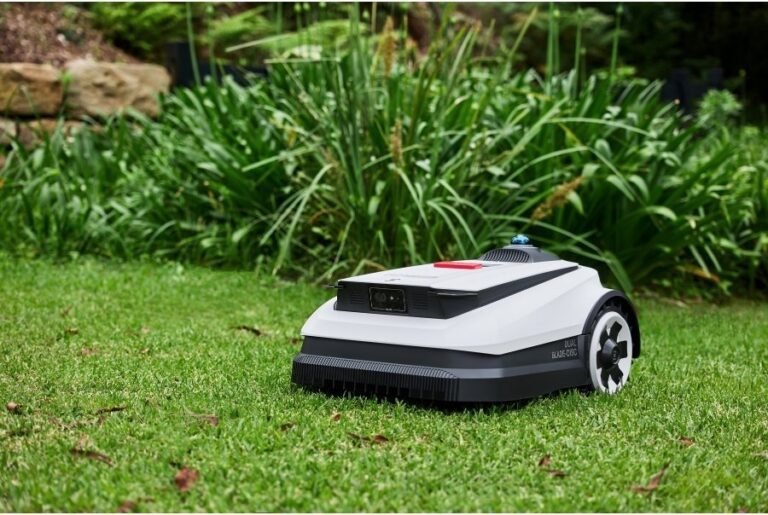

Are Robotic Lawn Mowers Quiet? Real Decibel Levels
Robotic lawn mowers are quiet — typically 55 to 65 decibels (dB) in normal operation, which is roughly the volume of a quiet conversation or a refrigerator hum, and noticeably softer than the 75 to 95 dB a gasoline push mower produces. That gap is the single biggest reason people buy them, and it’s real: you can run a robot mower at 7 a.m. on a Saturday without waking your neighbors.
Key Takeaways

- Robot mowers run 55–65 dB, comparable to a dishwasher or normal speech — not silent, but far quieter than gas mowers at 75–95 dB.
- Electric push mowers sit in the middle at roughly 70–85 dB, so even a corded mower is louder than a robot.
- The noisiest part is the blade, not the motor. Thick, wet, or tall grass forces the blade to work harder and pushes dB up.
- Manufacturer dB ratings are measured at the machine, usually per EN 50636; your ears at 20 feet hear less.
- Quiet operation changes when you can mow — many owners schedule nighttime or early-morning runs, subject to local noise ordinances.
- Boundary wire and charging are near-silent; the docking and charging cycle adds almost nothing to the noise profile.
How Loud Is a Robotic Mower in Decibels?
Most robotic mowers are rated between 55 and 65 dB, with lighter models near the low end and larger, wider-cutting models near the top. For context, that’s the range of a normal conversation (60 dB) or a running dishwasher (55–60 dB). It isn’t silent — you’ll hear the whir of the blade and the soft roll of the wheels — but it fades into background noise within a few yards.
The rating you see on a spec sheet is usually measured at the mower itself, often following the EN 50636 outdoor-equipment standard. Stand 20 feet away and the perceived level drops further, which is why neighbors rarely notice a robot mower running next door.
How Robotic Mowers Compare to Other Mowers
| Mower Type | Typical Noise Level | Comparable To |
|---|---|---|
| Robotic mower | 55–65 dB | Conversation, dishwasher |
| Corded electric push mower | 70–85 dB | City traffic, vacuum cleaner |
| Battery push mower | 75–85 dB | Blender, busy restaurant |
| Gas push mower | 75–90 dB | Motorcycle, leaf blower |
| Riding mower | 85–95 dB | Chainsaw, heavy truck |
The pattern is clear: removing the gas engine removes most of the noise. A robot mower is roughly 10 to 30 dB quieter than the alternatives, and because decibels are logarithmic, a 10 dB drop sounds about half as loud to the human ear.
What Actually Makes a Robot Mower Noisy?
The blade, not the motor
The electric motor is nearly silent. The sound you hear comes from the spinning blade cutting grass. Short, dry grass produces a faint hum; tall, wet, or thick grass makes the blade labor, and the pitch rises.
Grass height and moisture
Letting grass grow long between cuts is the most common cause of a louder-than-expected run. Frequent, light cuts keep the blade spinning freely and the noise low.
Terrain and obstacles
Bumps, slopes, and thick patches force the mower to work harder. A level, well-maintained lawn runs quieter than a rough one.
Model size and cutting width
Bigger mowers with wider decks and more powerful motors run slightly louder. A small entry-level unit may sit near 55 dB, while a large property model can reach 65 dB.
Why Quiet Operation Changes How You Use It

Because the mower is so quiet, you can run it on a schedule that suits you — overnight, during a work call, or while the kids nap. Many owners set theirs to mow daily in short sessions rather than one long weekly cut.
Pro Tip: If you want the quietest possible run, schedule mowing for early morning or evening when grass is dry but the lawn is otherwise unused, and keep the schedule frequent so the blade never faces tall grass.
Do You Still Need to Check Local Noise Rules?
Yes. Quiet doesn’t mean exempt. Many cities and HOAs have noise ordinances that restrict power equipment during certain hours, and some specifically address robotic or autonomous mowers. A unit running at 58 dB is unlikely to draw a complaint, but running it at 2 a.m. could still violate a local rule regardless of volume.
Check your municipal code or HOA guidelines before setting an overnight schedule. If your area restricts mowing to daytime hours, a robot mower’s low volume still lets you mow at the earliest allowed time without disturbing anyone.
Which Brands Are Quietest?
Most major manufacturers publish dB ratings, and the differences are modest — usually within a few decibels. When comparing, look for:
- Husqvarna Automower — long-standing robot mower line, ratings commonly in the mid-50s to low-60s dB.
- Worx Landroid — popular mid-range option with comparable noise levels.
- Segway Navimow — newer entrant with published noise specs.
- EcoFlow Blade and Mammotion Luba — models often cited for quiet operation.
Rather than chasing a single “quietest” model, compare the published dB rating on the spec sheet and prioritize a mower sized correctly for your lawn. An oversized mower on a small lawn runs less often and quieter overall.
How to Keep Your Robot Mower Running Quiet
| Action | Why It Helps |
|---|---|
| Mow frequently, not deeply | Short grass means less blade resistance |
| Replace dull blades | Sharp blades cut cleanly with less effort |
| Clear debris and sticks | Obstacles cause the motor to strain |
| Keep the deck clean | Caked grass unbalances the blade |
| Mow when grass is dry | Wet grass is heavier and louder |
| Level rough patches | Smooth terrain reduces strain |
Warning: A sudden increase in noise often signals a dull, bent, or damaged blade or a trapped object. Stop the mower and inspect the blade before running it again.
Related guides
Frequently Asked Questions
Are robotic lawn mowers completely silent?
No. They produce a soft mechanical hum from the spinning blade and wheels, typically 55–65 dB. You’ll hear it up close, but it fades quickly with distance and rarely bothers neighbors. It’s quiet enough to run while you’re home, working, or sleeping nearby.
Can I run a robotic mower at night?
Often yes, because the low volume rarely disturbs anyone. But local noise ordinances and HOA rules may still restrict the hours you can operate outdoor power equipment. Check your local code first, even though the mower itself is quiet.
Is a robotic mower quieter than an electric push mower?
Yes. Electric push mowers typically run 70–85 dB, while robot mowers sit at 55–65 dB. The robot is roughly 10 to 20 dB quieter, which the ear perceives as significantly softer — often less than half as loud.
Why is my robotic mower getting louder?
The most common causes are dull or bent blades, tall or wet grass, and debris trapped in the deck. A mower that suddenly sounds louder usually needs a blade check or a shorter, more frequent mowing schedule.
Do all robotic mowers have the same noise level?
No. Ratings range from about 55 dB on small models to 65 dB on larger ones. Differences are modest, so compare the published dB spec and choose a mower correctly sized for your lawn rather than chasing a single quietest model.
Does the charging station make noise?
The docking and charging cycle is near-silent. You may hear a brief mechanical sound as the mower docks, but charging itself produces no meaningful noise, so it won’t disturb anyone nearby.
Conclusion
If noise was your main hesitation, a robotic mower is one of the quietest powered tools you can put on a lawn — quieter than a conversation, and far quieter than any gas or electric push mower. Your next step is simple: check your local noise ordinance for allowed mowing hours, then compare published dB ratings on two or three models sized for your yard.

Daniel Carter is a home improvement specialist and tool researcher with years of experience studying power tools, hand tools, workshop equipment, outdoor gear, and DIY projects. At HomeToolWorld, he researches products, compares features, reviews manufacturer specifications, and creates practical buying guides to help homeowners, DIY enthusiasts, and professionals make informed decisions. His goal is to provide accurate, easy-to-understand, and trustworthy content based on careful research and real-world applications.