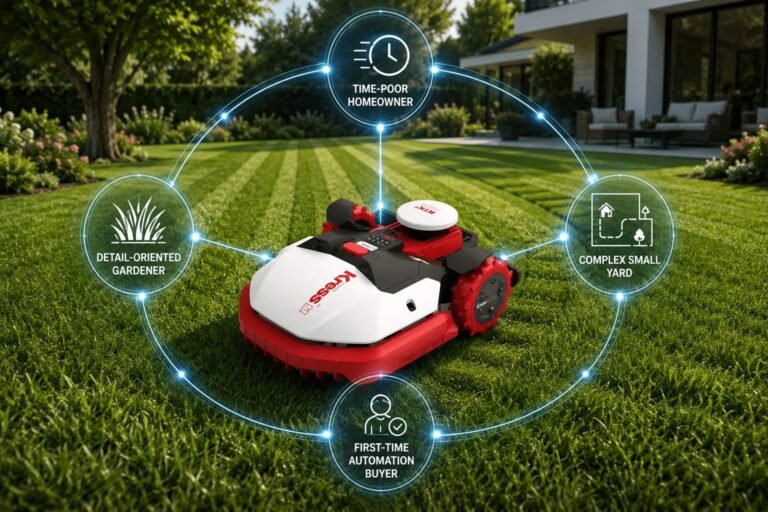
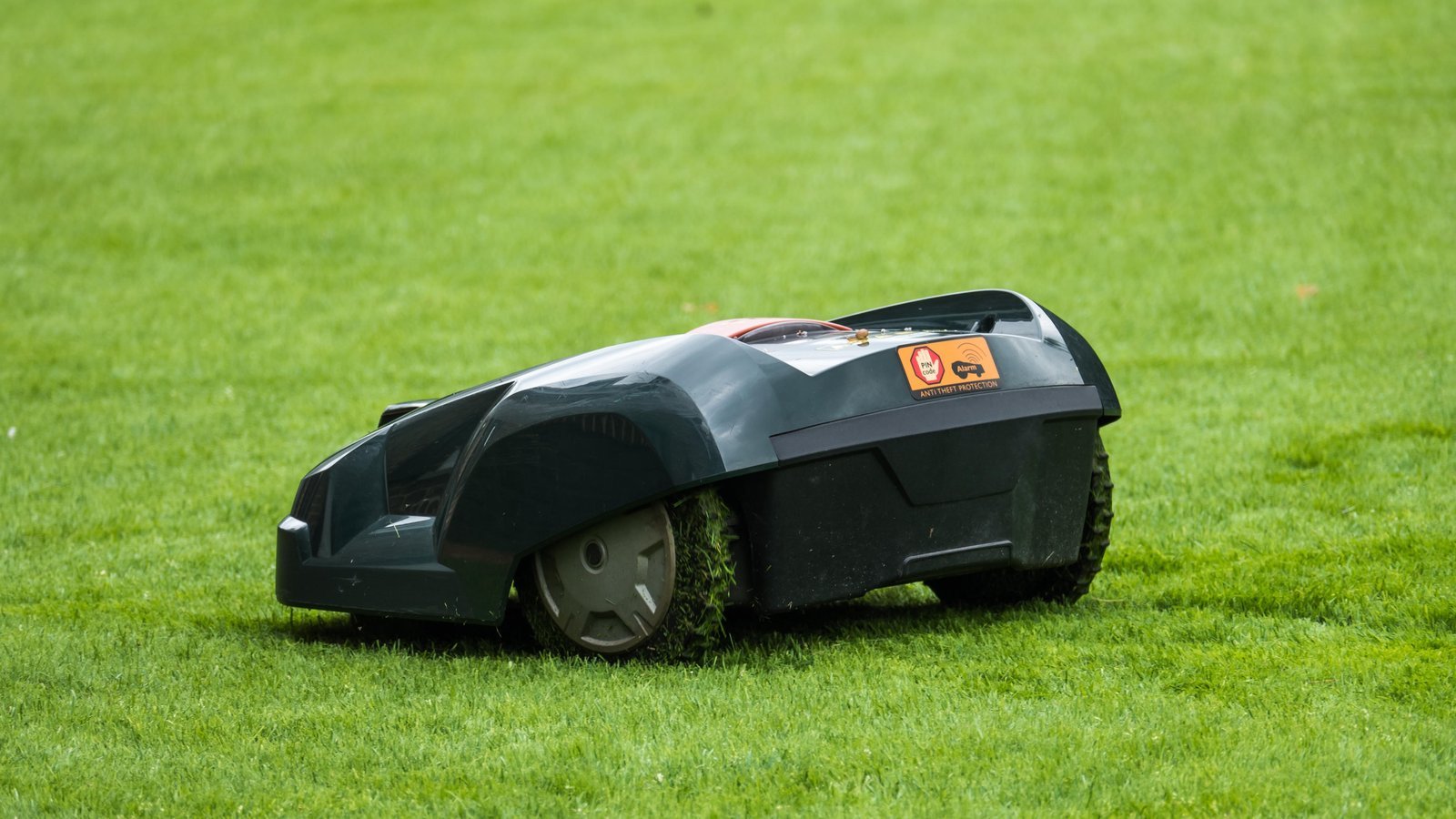
Robotic Lawn Mower Buyer Mistakes to Avoid Before You Buy
The biggest robotic lawn mower buyer mistakes start with the yard, not the mower. People buy the model a neighbor loves, then find their own lawn is too steep, too cut up, or too open for it. The fix is simple: measure your lawn first, then match the machine to it.
What most people do vs. what actually works

| What most people do | What to do instead | Why it matters |
|---|---|---|
| Buy for the biggest lawn in ads | Match the mower’s rated area to your real lawn size | It runs all day and still leaves strips uncut |
| Skip the boundary wire plan | Map the wire route before you buy | You dig twice and waste a weekend |
| Ignore slope limits | Check your steepest slope in degrees | The mower slips, stalls, or slides off course |
| Assume it handles any obstacle | Clear toys, hoses, and small pots first | It gets stuck and stops until you free it |
| Set it loose with no schedule | Set a cutting schedule from day one | The lawn looks patchy for weeks |
| Never check firmware | Update the app and firmware after setup | You miss fixes for known docking problems |
| Buy the cheapest model | Pay for the features your lawn needs | You replace it within two seasons |
Measure your lawn before buying a robotic mower
People pick a mower by brand name and price, then read the specs afterward. That order is backward, and it’s the root of most returns. The rated area on the box assumes a simple, open, flat lawn. If your lawn has narrow gaps, flower beds, or two separate patches, the mower covers less than the number suggests.
Start with a tape measure or a phone mapping app. Write down three numbers: total lawn area, your steepest slope in degrees, and the width of your narrowest gap between obstacles. The manufacturer’s manual states the maximum slope its model handles, so compare your number to that page, not to a review.
The U.S. Consumer Product Safety Commission publishes safety guidance for walk-behind mowers, and it’s worth reading before you set a blade loose in a yard where kids play: CPSC mower safety guidance.
If your lawn is under a quarter acre and mostly flat, a basic model covers it. If your steepest slope is above the mower’s stated limit, no schedule setting will save it — you need a different model or a different plan.
Don’t skip the boundary wire plan

The boundary wire is the part people rush, and it’s the part that decides whether the mower works. Most buyers lay wire along the fence line and hope for the best. That leaves the mower bumping into beds, cutting over edges, and wandering into the street.
Walk the perimeter first with a sketch. Mark every tree, swing set, and garden bed wider than about a foot. The mower needs a set distance from the wire to turn, and that distance is in your manual — usually a range in inches, not a single number. Leave the mower’s stated clearance on both sides of the wire, and widen it on slopes.
Bury the wire or pin it down tight. Loose wire gets cut by the blade or pulled up by frost. If you can’t dig, pin it every few feet and check it after the first rain.
This step takes an afternoon. Skipping it takes three weekends, because you’ll redo the whole loop once the mower starts escaping.
Set the schedule before the first cut
A new mower on a random schedule cuts unevenly and stresses the grass. People turn it on when they remember, then blame the machine for a ragged lawn. Robotic mowers work best on short, frequent cuts, not one long weekly pass.
Set a schedule that runs the mower most days, and let it cut a little each time. Start with a higher cutting height for the first two weeks, then lower it in small steps. That lets the grass adjust and keeps clippings small enough to break down.
Check the app after each of the first three runs. Look at where it docks, where it stalls, and how much lawn it left. Adjust the schedule, the height, or the wire from what you see, not from the default settings.
Your local extension office or the mower’s own manual gives you the starting height for your grass — read your value there, not from a number in an article.
Tips that sound smart but waste your money
- “Buy the biggest model you can afford.” Extra capacity only helps if your lawn needs it. On a small flat yard, a large mower just costs more and docks more often.
- “You never have to touch it.” Blades dull, wheels slip, and sensors get dirty. Every mower needs the maintenance its manual lists, on the schedule it lists.
- “GPS models need no boundary wire.” Some wire-free models exist, but they still need a clear map and a strong signal. Check the maker’s own coverage page for your yard shape.
- “Set it and forget the app.” Firmware updates fix docking and navigation faults. Skipping them leaves known problems in place.
- “Any mower handles any slope.” Slope limits are real and stated per model. Check your manual’s page for the exact figure before you buy.
The full setup, step by step
- Measure your lawn area, steepest slope in degrees, and narrowest gap in inches. Write all three down. These decide which models even qualify.
- Read the mower’s manual for its rated area, slope limit, and wire clearance. Compare each number to your three measurements before you buy.
- Sketch the wire route on paper. Mark trees, beds, and slopes. Leave the manual’s stated clearance on both sides of the wire.
- Install the boundary wire and the charging station on a level, shaded spot near a power outlet. Pin or bury the wire, then test the signal.
- Set the cutting height high for the first two weeks. Lower it one small step at a time after that.
- Build a schedule that runs most days. Shorter, more frequent cuts beat one long weekly pass.
- Watch the first three runs. Note where it stalls or docks, then adjust the wire or schedule from what you see.
- Update firmware and clean the sensors and blades on the schedule your manual gives. Check the blades monthly during growing season.
Related guides
- Best Air Compressors 2026: Top Picks for Smart Buyers
- Best Power Tool Combo Kits 2026: Top 11 Picks for Smart Buyers
Frequently asked questions
Can a robotic mower handle a steep slope?
Only up to the slope limit in its manual, usually given in degrees or as a percentage. Above that limit, the wheels slip and the mower slides off course. Check your steepest point with a level and angle gauge, then compare it to the spec page for that exact model.
How long does it take to install a boundary wire?
Plan on 3 to 6 hours for a typical quarter-acre lawn, longer if you bury the wire or the yard has many obstacles. Pinning the wire down is faster than burying it. The time goes up with the number of trees, beds, and separate lawn zones you need to loop around.
Is it safe to run a robotic mower around kids and pets?
Yes, if you follow the maker’s safety rules and keep the blade area clear. Many models have lift or tilt sensors that stop the blades. The CPSC advises keeping children and pets away while any mower runs. Never let anyone ride on it or reach under it while it’s moving.
What happens if my lawn is bigger than the rated area?
The mower runs longer each day and may never finish the whole lawn. It also wears faster and can leave uncut strips. Match the rated area to your real lawn size, and add margin if your lawn has many obstacles that slow the mower down.
Why does my robotic mower keep getting stuck?
Toys, hoses, small pots, and holes are the usual causes. Loose wire and worn wheels cause it too. Walk the lawn and clear small objects before each run. If it still sticks, check the wire signal and the wheel tread against the manual’s maintenance page.
Does a robotic mower replace all lawn care?
No. It cuts grass, but you still trim edges, water, fertilize, and clear leaves. It also needs blade changes and sensor cleaning. Think of it as one tool in your lawn routine, not the whole routine.
How often should I replace the blades?
Check them monthly during growing season and replace them when they’re nicked or dull, which for many models means every 1 to 3 months of active cutting. Sandy soil dulls blades faster. Your manual states the exact interval for your model — follow that page, not a general rule.
Do I still need to mow by hand sometimes?
Yes, especially on slopes above the limit, tight corners, and along fences. A robotic mower handles the open middle well. Keep a trimmer or hand mower for the edges it can’t reach, and check those spots after the first few runs.
Conclusion
Buy the mower that fits your lawn’s numbers, not the one with the best ad. Measure first, plan the wire, and set a real schedule — that’s what separates a mower that lasts from one that sits in the garage.

Daniel Carter is a home improvement specialist and tool researcher with years of experience studying power tools, hand tools, workshop equipment, outdoor gear, and DIY projects. At HomeToolWorld, he researches products, compares features, reviews manufacturer specifications, and creates practical buying guides to help homeowners, DIY enthusiasts, and professionals make informed decisions. His goal is to provide accurate, easy-to-understand, and trustworthy content based on careful research and real-world applications.