
Pros and Cons of Robotic Lawn Mowers: Are They Worth It?
For most yards, a robotic mower is worth it if your lawn is simple, open, and under about half an acre — it cuts a little every day, so you never bag clippings or push anything. If your lawn is small, cut off by narrow gates, or full of obstacles, a push mower wins. Check the maker’s own yard-size rating before you buy.
Robotic mower options compared

The right pick depends on your lawn’s shape, your budget, and how much setup you’ll tolerate. Wired models need a boundary wire buried or pegged around the edge. Wire-free models use GPS or camera mapping instead. Here’s how the main types stack up.
| Method | How long | Effort | Cost | Best for |
|---|---|---|---|---|
| Wired robotic mower | 1-2 days to install | Medium | Low | Simple, open yards |
| Wire-free robotic mower | 1-2 hours to set up | Low | High | Yards with no buried wire allowed |
| Hire a lawn service | Weekly visits | Very low | High | People who want zero involvement |
| Push or ride-on mower | 1-2 hours per cut | High | Low | Small or complex lawns |
Every row loses somewhere. The wired mower is cheapest to run but hardest to install. The wire-free one is easy to set up but costs the most up front. Check current prices at the maker’s site, since they change often.
How a wired robotic mower works
This is the classic setup, and it’s still the most common. You lay a thin boundary wire around the edge of your lawn, and the mower follows it to know where to stop.
- Peg or bury the boundary wire around the lawn edge, about 12 inches from the border.
- Place the charging dock on a flat spot with power nearby, and connect the wire to it.
- Set the cutting height — most models adjust from about 1 to 3 inches.
- Let it charge, then run it daily. A typical schedule is 1-2 hours per day.
It handles flat, open lawns well and cuts evenly because it trims a little each day. The weakness: laying the wire is slow work, and a wire cut by a spade or a garden fork stops the mower until you splice it. If you can’t dig or peg a wire, this isn’t for you.
How a wire-free robotic mower works

Wire-free models skip the boundary wire and use GPS, cameras, or sensors to map your lawn. Setup is faster, but the technology costs more.
- Place the charging dock and let the mower map the lawn on its first few runs.
- Set no-go zones in the app for flower beds, ponds, or a dog’s run.
- Adjust the cutting height and schedule in the app — daily cuts of 1-2 hours suit most lawns.
- Update the map when you add a shed, a tree, or a new bed.
The strength is flexibility: no wire to bury, and you redraw zones from your phone. The weakness is price and accuracy. Dense shade, tall trees, or a narrow side yard can confuse GPS, so the mower may miss spots. If your lawn is heavily shaded, a wired model is often more reliable.
How a lawn service compares
If the idea of owning and maintaining a mower doesn’t appeal, paying someone else is a real option. You get a professional cut and no equipment to store.
- Get quotes from two or three local services and ask what’s included.
- Agree on a schedule — weekly is common in growing season.
- Clear toys, hoses, and pet waste before each visit.
- Check the work after the first few cuts and raise any issues early.
The upside is zero effort and a tidy result every time. The downside is the ongoing cost, which adds up over years, and you’re tied to their schedule, not yours. A fourth option — a ride-on mower — only makes sense for lawns over an acre, where a robot’s daily runs can’t keep up. For most people, it’s not worth the money.
Which robotic mower fits your situation?
If you’re in a hurry, hire a lawn service. You’ll get a cut this week with no setup, no wire, and nothing to learn. It costs the most over time, but it’s the fastest path to a tidy lawn.
If it’s your first robotic mower, start with a wired model. It’s the cheapest to buy and run, the setup is well documented, and it teaches you how these machines behave before you spend more. The trade-off is a slow install day.
If you want the best possible result and cost isn’t the issue, go wire-free. You skip the wire, control everything from an app, and can redraw zones as your garden changes. The trade-off is a higher price and weaker performance under heavy shade. Weigh that against how much of your lawn sits in shadow.
What matters whichever mower you pick
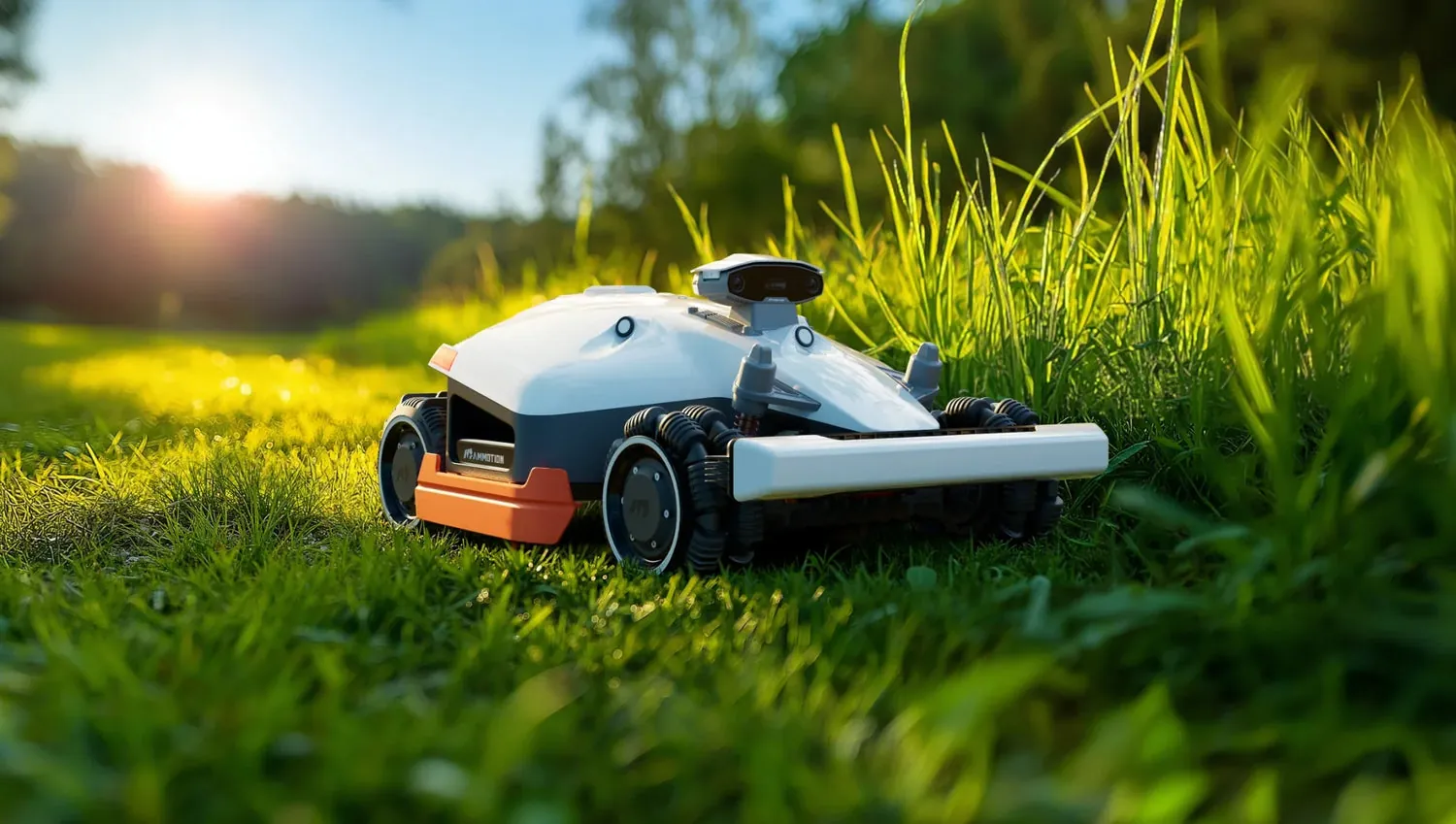
A few things apply no matter which route you take. Get these right and the rest is detail.
- Match the model to your lawn size. Makers publish a maximum yard size for each model. A mower rated for a quarter acre will struggle on half an acre — it’ll run all day and still leave patches. Check the maker’s own rating, not a seller’s.
- Prep the lawn first. Fill holes, clear stones, toys, and fallen branches. A robot hitting a rock can damage its blades or stall.
- Check the blades partway through the season. Dull blades tear grass instead of cutting it, which leaves brown tips. Most makers sell replacement blades and show you how to swap them.
- Watch the first week closely. Stay nearby for the first few runs so you can spot where it gets stuck.
If your mower needs wiring into mains power, or you’re unsure about electrical work, call a qualified electrician. Don’t do that part yourself.
Related guides
Frequently asked questions
Are robotic mowers safe around pets and children?
Yes, when used as directed. Modern models stop their blades the moment they’re lifted or tilted, and most have bump sensors. Still, keep small children and pets away while it’s running, and don’t let anyone ride on it. Follow the maker’s safety instructions, and check the US Consumer Product Safety Commission for any recalls.
How long does a robotic mower battery last?
Most last a few years with daily use, but that varies with lawn size, cutting height, and how hard the mower works. A bigger lawn means more charge cycles and a shorter life. Replacement batteries are sold by the maker — check their site for your model’s price and rating.
Do robotic mowers work on wet grass?
No, most don’t. Rain sensors send them back to the dock, and cutting wet grass clogs the deck and leaves clumps. Some models handle light dampness, but it’s best to let the lawn dry first. Check your model’s manual for its exact rain-setting options.
Can a robotic mower handle slopes?
Yes, up to a limit. Most handle slopes of around 15 to 25 degrees, but the exact figure is in your model’s spec sheet — steeper lawns need a model rated for it. Very steep banks are a genuine weak spot, and some yards simply aren’t suitable.
What happens if my robotic mower hits something?
It stops or turns away. Bump sensors and lift sensors cut the blades, and most models then reverse and try a new path. Sharp objects like rocks or metal can still damage the blades, so clear the lawn before the first run.
Do I still need to mow the edges?
Yes, usually. A robotic mower can’t always reach right up to walls, fences, or beds, so you’ll trim those strips by hand every few weeks. Some models get closer than others — check the cutting-edge distance in the specs before you buy.
Is a robotic mower worth the money?
For a simple, open lawn under about half an acre, yes — the daily cutting saves real time and the lawn looks tidier. For a small, cluttered, or very steep yard, no. A push mower is cheaper and simpler.
Conclusion
Before you buy, measure your lawn and walk your property line to spot tight spots or steep slopes. Then pick a model that fits your real yard, not the brochure’s best case. You’ll save yourself a return and a lot of frustration.

Daniel Carter is a home improvement specialist and tool researcher with years of experience studying power tools, hand tools, workshop equipment, outdoor gear, and DIY projects. At HomeToolWorld, he researches products, compares features, reviews manufacturer specifications, and creates practical buying guides to help homeowners, DIY enthusiasts, and professionals make informed decisions. His goal is to provide accurate, easy-to-understand, and trustworthy content based on careful research and real-world applications.