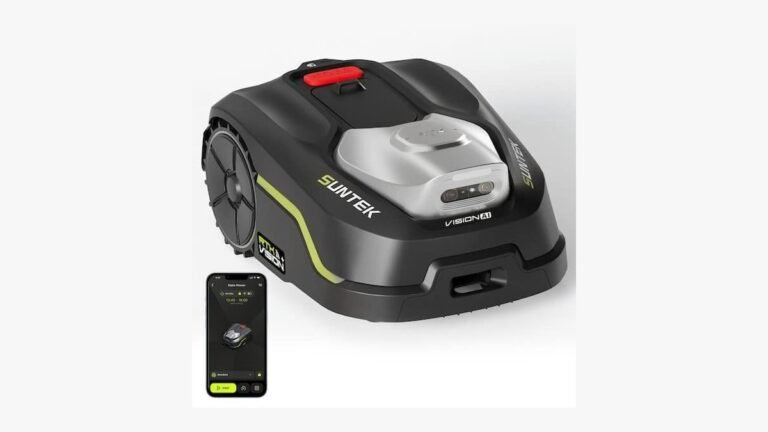

Robotic Mower Noise Regulations: What You Need to Check
Usually, yes. Most robotic mowers sold in the US and Europe are built to run quietly enough for daytime use, so the deciding factor isn’t the mower — it’s your local rules and the time you run it. Get that wrong and you’re looking at a noise complaint, a fine, or a neighbor dispute that outlasts the mower itself.
Can you run a robotic mower without breaking noise rules?

The honest answer: it depends on your mower’s decibel rating and where you live. A typical robotic mower runs at 55-60 dB(A) — roughly the sound of a normal conversation. That’s quieter than a gas mower, but it’s not silent, and “quiet” isn’t the same as “allowed at 6 AM.”
| Situation | Safe? | Why |
|---|---|---|
| Daytime on a weekday | Yes | Fits most local noise windows |
| Early morning before 7 AM | No | Many towns set a quiet-hours start |
| Evening after 10 PM | No | Quiet hours usually cover this |
| Weekend daytime | With care | Some areas restrict Sunday mowing |
| Apartment balcony | With care | Neighbors share the wall, rules vary |
| Near a hospital or school | With care | Local zones can add limits |
| During a noise complaint | No | One report can trigger enforcement |
The middle column is the whole point here. “Safe” doesn’t mean “guaranteed fine-free” — it means you’re inside the usual rules. Your specific town may be stricter, so check your city or county noise ordinance page before you set a schedule.
What the actual risk looks like
The real harm isn’t the mower itself — it’s a noise complaint that escalates. In most US cities, a first complaint is a warning. A second or third can bring a fine, and fines vary widely by jurisdiction, often inexpensive relative to the alternative. You can read the exact figure in your own city’s noise ordinance, usually posted on the municipal website.
On the health side, 55-60 dB(A) at close range isn’t a hearing risk. The World Health Organization flags sustained nighttime noise above 40 dB as disruptive to sleep, which is why quiet hours exist in the first place. If your mower runs at night and your neighbor’s bedroom wall is close, that’s the real problem — not hearing damage, but sleep disruption.
For the legal side, the rules come from three places: your city or county noise ordinance, any homeowners association (HOA) bylaws, and — for the mower itself — the manufacturer’s stated decibel rating. There’s no active federal noise program; noise rules come from your city or county ordinance and any HOA bylaws, and enforcement is local.
The likelihood of a problem depends on three things: how close your neighbor’s window is, what time you run the mower, and whether your HOA has its own rules on top of the city’s. A mower at 58 dB at noon is a non-issue. The same mower at 6 AM next to a bedroom window is a complaint waiting to happen.
Signs you need to stop immediately

- A neighbor has already complained once. That’s your signal to change the schedule now, not after a second report.
- Your HOA has sent a written notice. Written notices usually come before fines, and ignoring one moves you straight to enforcement.
- The mower runs during your town’s posted quiet hours. Most ordinances list these on the municipal website — check the exact window.
- You’re mowing near a hospital, school, or care facility. These zones often have tighter limits than the rest of the city.
- You can hear it clearly through a closed window from inside a neighbor’s house. If you can, they can too, and that’s the threshold complaints are built on.
If a complaint has already turned into a formal notice or a fine, stop running the mower on that schedule and talk to your HOA or city office directly. Don’t try to argue your way out of a noise ordinance — that’s a job for someone who knows the local code.
The safer way to run it
- Check your mower’s decibel rating first. It’s printed in the manual or on the manufacturer’s spec page — usually 55-60 dB(A) for robotic models. Write the number down.
- Look up your city or county noise ordinance. Search “[your city] noise ordinance hours” and find the quiet-hours window. Most start between 10 PM and 11 PM and end between 6 AM and 7 AM.
- Set the mowing schedule inside daytime hours only. Aim for 9 AM to 6 PM on weekdays. That keeps you well clear of both ends of the quiet window.
- Check your HOA rules separately. HOA bylaws often add limits the city doesn’t have — Sunday restrictions, for example. Read the actual document, not a neighbor’s summary.
- Move the charging base away from shared walls. If the base sits against a neighbor’s bedroom wall, the mower’s return trips add up. Even 10 feet of distance helps.
- Run it every other day instead of daily. Less total runtime means less total noise exposure for everyone nearby, and most lawns don’t need daily cutting.
- Tell your neighbor before you start. A two-minute conversation ahead of time prevents most complaints. People complain about surprises, not about mowers.
- Adjust if anything changes. New neighbor, new HOA board, new city rule — recheck once a year. Rules do get updated.
If a complaint has already happened

Start by reading the notice carefully. It will tell you which rule you broke — city ordinance, HOA bylaw, or both — and what the next step is. Most first notices are warnings, not fines, and responding quickly usually ends it there.
Next, change the schedule before you respond. Move your mowing window to mid-morning on weekdays, well inside daytime hours. Then reply to whoever sent the notice — your HOA board or the city — and tell them what you’ve changed. A short, factual reply works better than a long explanation.
If a fine has already been issued, that’s where this stops being a DIY problem. Paying it or contesting it depends on your local code, and the rules differ enough that you should talk to your city’s code enforcement office or, if it’s an HOA matter, a lawyer who handles property disputes. Don’t guess at the process — one wrong response can turn a warning into a recurring fine.
One more thing: if the complaint came from a neighbor rather than an official body, handle it directly and politely. Most noise disputes end with a conversation, not a citation.
Frequently asked questions
How loud is a robotic mower in decibels?
Most models run at 55-60 dB(A), which is about the level of a normal conversation. That’s quieter than a gas mower, which typically runs 90 dB or higher. Check your specific model’s manual or spec sheet for the exact figure — it varies by brand and blade type.
What time can I run a robotic mower?
Usually between 7 AM and 10 PM on weekdays, but this depends entirely on your local noise ordinance. Many cities set quiet hours from 10 PM to 7 AM. Check your city or county website for the exact window — don’t assume it matches a neighboring town.
Is it safe to run a robotic mower at night?
No, not in most places. Even though the mower itself isn’t a hearing risk at 55-60 dB, nighttime noise above 40 dB can disrupt sleep, which is why most ordinances ban it. Some HOAs ban nighttime mowing outright regardless of decibel level.
Can my HOA ban robotic mowers?
Yes, an HOA can restrict or ban robotic mowers if its bylaws cover lawn equipment or noise. HOA rules can be stricter than city ordinances. Read your HOA’s governing documents directly — the specific language matters more than what a neighbor tells you.
What happens if a neighbor complains about my robotic mower?
Usually a warning first, then a fine if the problem continues. Fines vary by city and are inexpensive relative to the alternative. If your HOA is involved instead of the city, the penalty comes from the HOA, not the government.
Do robotic mowers need to run every day?
No. Most lawns do fine with every-other-day mowing, and some models handle a full week on one charge depending on lawn size. Running less often means less noise exposure and fewer chances for a complaint. Check your model’s recommended schedule in the manual.
Does a robotic mower’s decibel rating matter legally?
Not directly — the law cares about time of day, not decibels, in most places. Some ordinances do set a decibel limit, often around 55-65 dB at the property line. Your mower’s rating tells you if you’re likely to pass that test.
Can I get a fine for a robotic mower I didn’t know was loud?
Yes. Not knowing the decibel level isn’t a defense against a noise ordinance. The responsibility is on you to check your mower’s rating and your local rules before you set a schedule. Ignorance won’t get a fine waived.
Conclusion
The short version: your robotic mower is probably quiet enough, but “quiet enough” isn’t the standard — your local rules are. Check your city’s noise ordinance and your HOA bylaws, keep the schedule inside daytime hours, and talk to your neighbor before they have a reason to complain. That’s the whole game.

Daniel Carter is a home improvement specialist and tool researcher with years of experience studying power tools, hand tools, workshop equipment, outdoor gear, and DIY projects. At HomeToolWorld, he researches products, compares features, reviews manufacturer specifications, and creates practical buying guides to help homeowners, DIY enthusiasts, and professionals make informed decisions. His goal is to provide accurate, easy-to-understand, and trustworthy content based on careful research and real-world applications.