Do Robotic Lawn Mowers Work on Hills? Slope Limits Explained
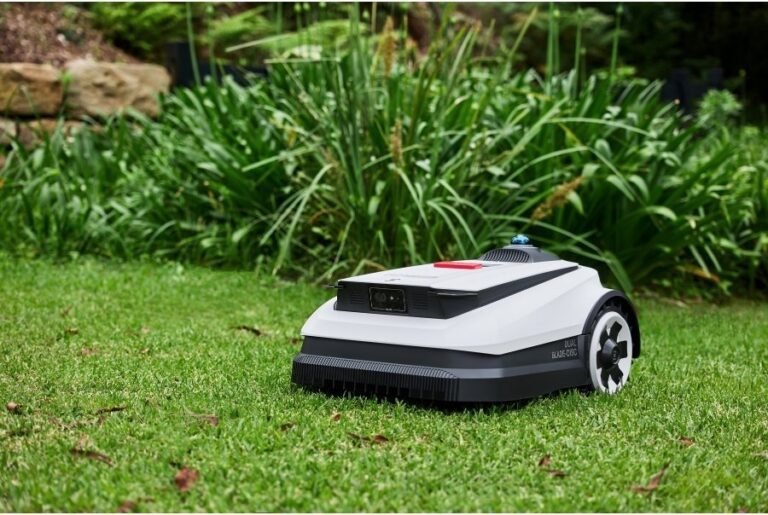
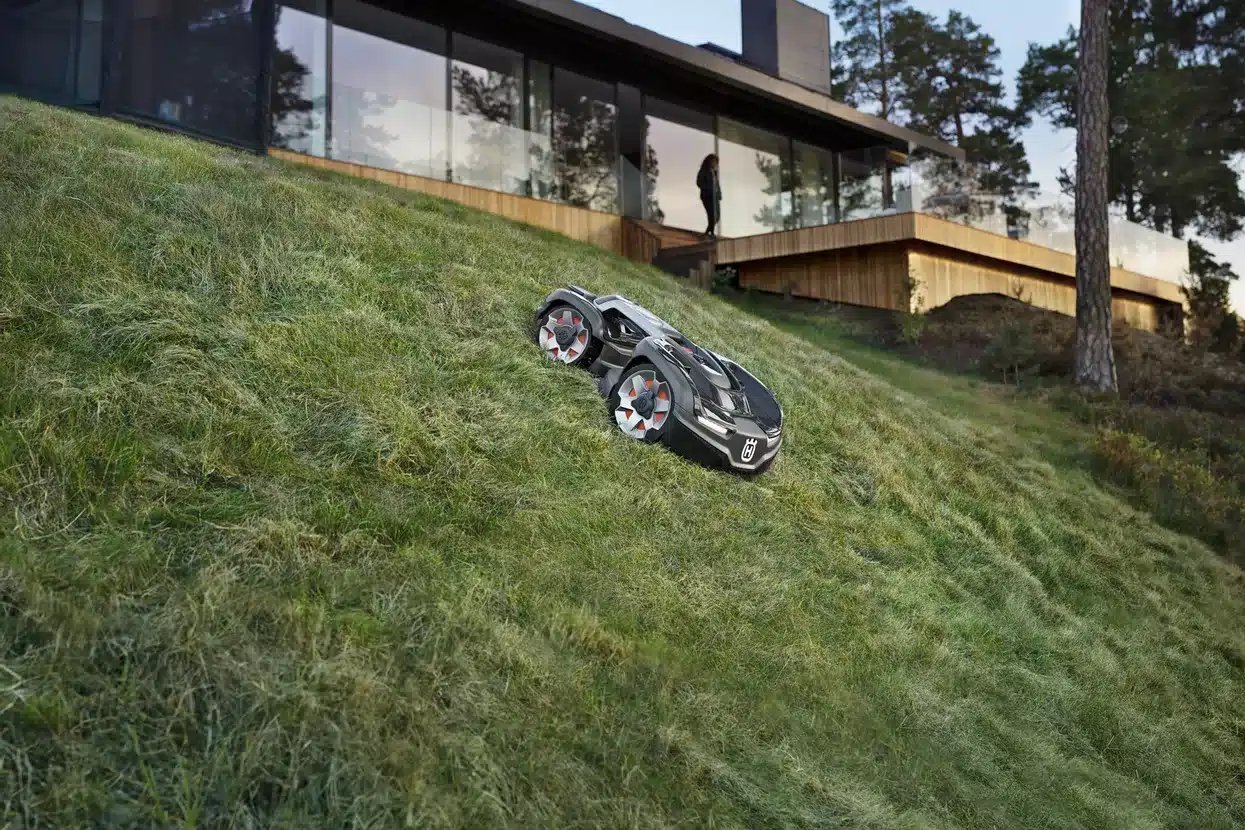
Yes, robot mowers can work on hills, but only within the slope limit the maker states for that model. Most models handle about 15° to 24° (roughly 27% to 45% grade), and a few go to 35°. Above that, the wheels slip, the blades cut unevenly, and the mower may slide. Check your model’s rating before you buy.
The one thing that decides success is traction, not motor power. Slope angle, wet grass, and tire type all change grip, so a mower rated for 24° may still struggle on a 20° slope after rain. The most common mistake is buying by brand reputation instead of reading the slope figure for the exact model — makers often rate one size lower than the next in the same range.
Slope limits are usually listed in degrees, but some makers use percent grade, and the two don’t match. A 25% grade is about 14°, not 25°. Mixing them up means you buy a mower that can’t climb your yard. Measure your own slope first, or have someone measure it, so you’re comparing real numbers.
Making robotic lawn mowers work on slopes
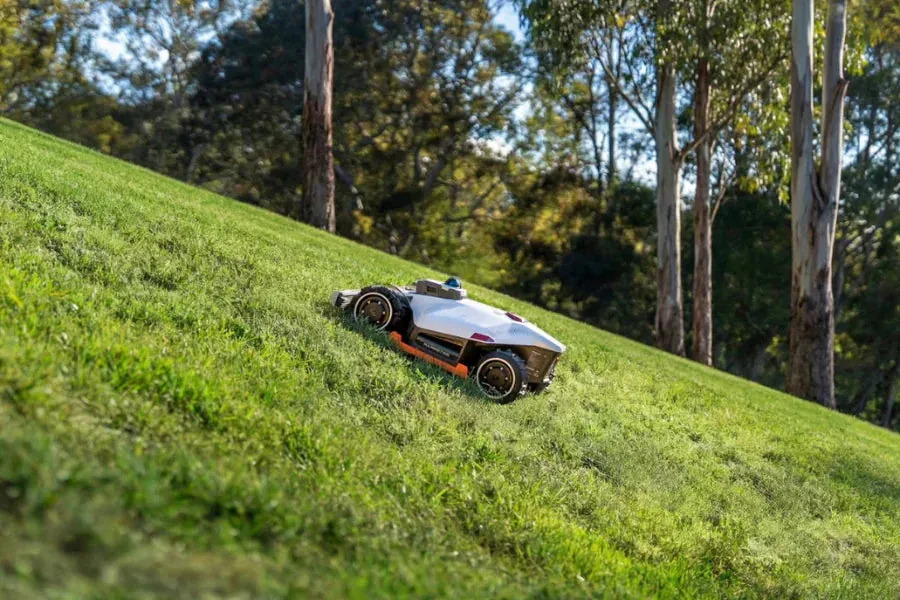
- Measure the steepest part of your lawn in degrees, not by eye. Use a phone level app or a long board with a spirit level. Write the number down before you shop.
- Compare that number to the model’s published slope rating, and leave a 3° to 5° buffer. A 22° slope needs a mower rated for at least 25°.
- Install the boundary wire so the mower crosses the slope diagonally, not straight up and down. Angled passes give the wheels more grip and stop spinning.
- Set the cutting height 1 to 2 settings higher than you would on flat ground. Taller grass hides dips, and the deck clears small bumps better.
- Keep the blades sharp and check them every 4 to 6 weeks in the growing season. Dull blades pull the mower sideways on a slope.
- Run the mower when the grass is dry. Wait at least 2 hours after rain or watering before you start a cycle.
Tip: Never test a new mower on your steepest section first. Run it on flat ground for a week so you learn how it turns and stops.
Tip: If your slope is above 30° or has a drop at the bottom, this stops being a DIY job. Talk to a dealer who installs on slopes, because a mower that slides can roll into a road, a pool, or a wall.
How long a robot mower takes on a slope
A slope doesn’t just slow the mower down — it shortens each run and adds charging time. On flat ground, a mower often covers the whole lawn in one or two cycles. On a hill, expect longer.
| Situation | How long | What changes it | What to watch for |
|---|---|---|---|
| Gentle slope, under 15° | Same as flat, 1–2 cycles | Dry grass, sharp blades | Almost nothing |
| Medium slope, 15°–24° | 1.5 to 2 times longer | Wet grass, tire wear | Wheel spin on turns |
| Steep slope, 25°–35° | 2 to 3 times longer, more charging | Model rating, battery size | Sliding, missed strips |
| Slope plus shade or damp soil | Adds another cycle | Moss, soft ground | Ruts forming |
| Slope with obstacles (trees, beds) | Adds 20–40 minutes per cycle | Boundary wire layout | Getting stuck |
If it’s taking far longer than the table suggests, check your tire tread and blade sharpness first, then re-measure the slope. A mower rated too low for the angle will always run slow.
Signs the mower is handling the slope well

You’ll know it’s working when the mower climbs without pausing, keeps a steady line, and leaves an even cut. Listen for the motor — a healthy climb sounds steady, not strained. Watch the wheels: light spin on a turn is fine, but constant spinning means the slope is too steep for that model.
Check the grass after each cycle. Missed strips, scalped patches, or a zigzag pattern all point to grip problems. If the signs disagree — the mower climbs fine but the cut looks patchy — the test that settles it’s a straight diagonal pass on the steepest strip. If it slips there, the slope is over the limit.
For safety and setup rules, always follow the maker’s manual that came with your mower. Always follow the maker’s manual over any general advice.
Mistakes that spoil a slope install

- Buying by brand, not by model. Slope ratings change between models in the same range, so a mower that works for a neighbor may fail on your yard. Check the exact model’s figure.
- Confusing degrees with percent grade. A 25% grade is only about 14°, so you may buy a mower that’s far weaker than you need. Convert before you compare.
- Running it on wet grass. Wet grass cuts grip fast, and a mower that slides can damage the lawn or hit something. Wait until the grass is dry.
- Skipping the boundary wire layout. A mower that climbs straight up a slope spins more than one that crosses at an angle. Plan diagonal passes.
- Ignoring the drop at the bottom. A slope that ends at a road, pool, or wall needs a physical barrier, not just a wire. Add one before the first run.
Frequently asked questions
Can a robot mower handle a 30 degree slope?
Only if that exact model is rated for 30° or more, and most aren’t. Many top out around 24°, and only a few reach 35°. Check the maker’s published figure for your model, then leave a 3° to 5° buffer. A 30° slope needs a mower rated for at least 33°.
Why does my robot mower slip on a hill it used to climb?
Worn tires and dull blades are the usual causes. Tread loses grip after a season or two, and dull blades pull the mower sideways. Check both, and also check for wet grass or moss. If the slope hasn’t changed but the mower has, the parts have.
How long does a robot mower take on a sloped lawn?
Expect 1.5 to 3 times longer than flat ground, depending on the angle and grass condition. A medium slope of 15° to 24° usually adds half again to each cycle. A steep slope of 25° to 35° can double or triple it, plus extra charging time.
Is it safe to let a robot mower run on a steep hill?
It’s safe if the slope is within the model’s rating and the bottom of the hill has a barrier. A mower that slides can roll into a road, a pool, or a wall. Add a physical stop, keep children and pets away during cycles, and never leave it running unattended on a slope above 30°.
What happens if the slope is too steep for the mower?
It will spin, slide, or stop mid-climb, and the cut will be patchy. Over time, wheel spin tears the grass and creates bare patches. If your slope is above the model’s limit, either buy a higher-rated mower or hire someone to mow that section.
Do robot mowers need special tires for hills?
Some models offer treaded or off-road wheels as an option, and they do help on slopes. Standard smooth wheels work fine on gentle slopes under 15°. For anything steeper, treaded tires and sharp blades matter more than motor power. Ask the dealer which wheels fit your model.
How do I measure my lawn slope for a robot mower?
Use a phone level app, or lay a long board on the slope and put a spirit level on top. Measure the angle in degrees and write it down. Then compare it to the model’s rating. Don’t guess by eye — a slope that looks gentle can be 20° or more.
Conclusion
A slope doesn’t rule out a robot mower — it just narrows your choice. Measure your angle first, match it to a model with a rating a few degrees higher, and keep the blades sharp and the grass dry. Do that, and a hilly yard mows itself just like a flat one.

Daniel Carter is a home improvement specialist and tool researcher with years of experience studying power tools, hand tools, workshop equipment, outdoor gear, and DIY projects. At HomeToolWorld, he researches products, compares features, reviews manufacturer specifications, and creates practical buying guides to help homeowners, DIY enthusiasts, and professionals make informed decisions. His goal is to provide accurate, easy-to-understand, and trustworthy content based on careful research and real-world applications.