
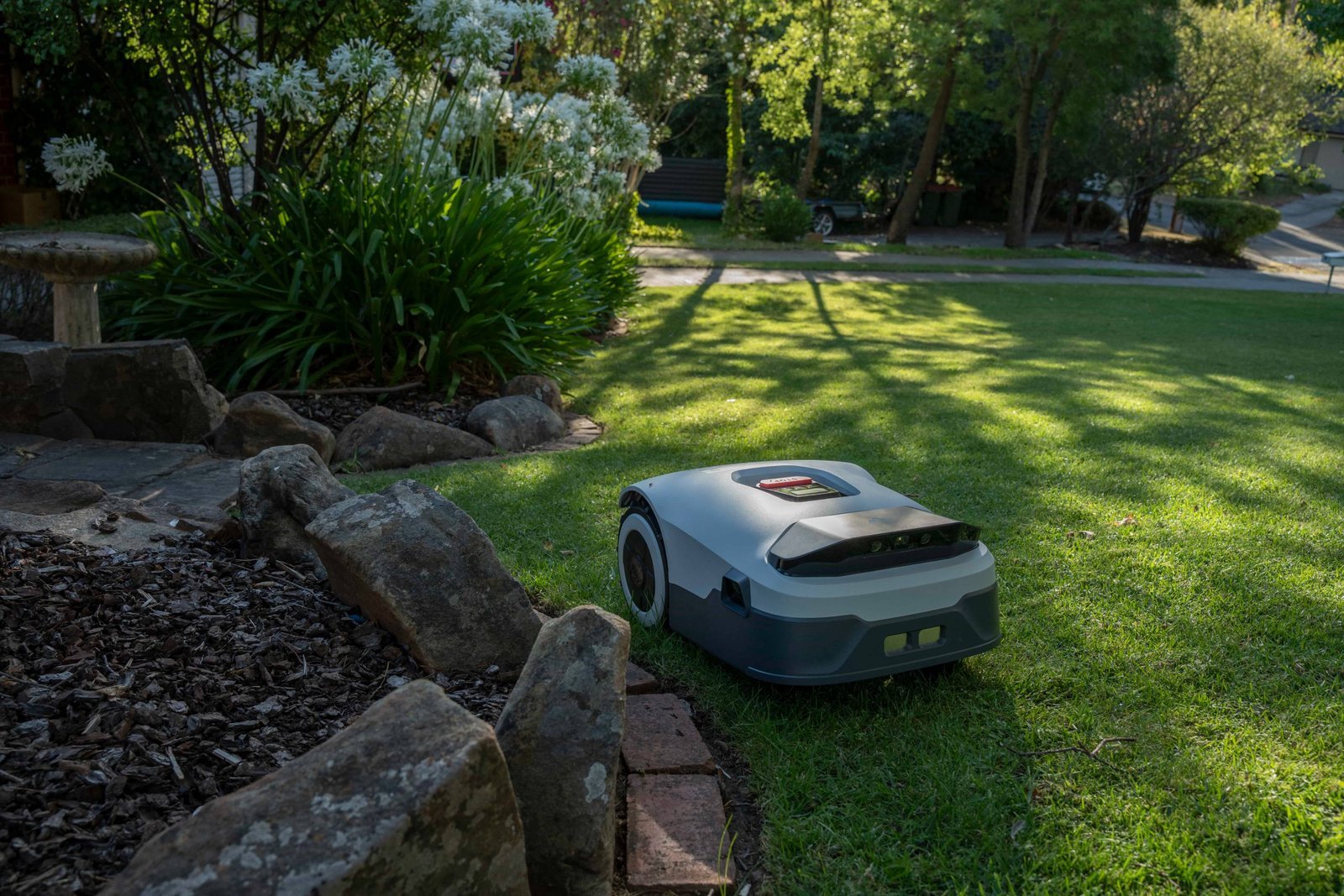
Robotic Lawn Mower Features to Look For: The 4 That Matter
Robotic lawn mower features to look for come down to four things most buyers end up relying on: boundary wire guidance, GPS navigation, rain sensors, and anti-theft tracking. They all share one job — cutting grass without you pushing anything. What separates them is how each one finds the edge of your lawn, and how much setup work that costs you.
Robotic mower features compared

Every mower on the market uses one of these guidance or safety systems, and the one you pick decides how much work goes into setup. Here’s the short version before the detail.
| Feature | Best for | Example |
|---|---|---|
| Boundary wire | Small, simple lawns | A wire pegged around the flowerbed |
| GPS navigation | Large, open yards | No wire, mapped by satellite |
| Rain sensor | Wet, changeable weather | Mower parks itself when it rains |
| Anti-theft alarm | Yards near a public path | PIN lock and loud siren |
| Camera navigation | Cluttered gardens | Sees and avoids a garden toy |
| Ultrasonic sensors | Lawn edges and walls | Slows down near a hedge |
| App control | Scheduling from anywhere | Start it from your phone |
Boundary wire guidance
Boundary wire is the oldest guidance system and still the most reliable on a small, awkward lawn. A thin cable runs around the edge of your grass, pegged to the ground or buried just under it, and the mower follows the signal. It suits anyone with under about a quarter acre and a yard full of beds, trees or narrow gaps.
What it’s good for:
- Cuts right to the edge of a flowerbed without wandering in
- Handles tight corners and separate lawn zones
- Works under trees where satellite signal drops
- Cheaper to buy than GPS models
The trade-off is installation. You’ll spend a weekend pegging wire, and a spade or a wire-laying tool cuts the trench. For a typical 5,000 sq ft yard, plan on 4 to 8 hours of work depending on how many obstacles you’re routing around. Once it’s down, though, the mower just runs.
GPS navigation
GPS navigation lets the mower map your lawn by satellite instead of following a wire, which is the big difference from boundary wire — no cable to bury. It suits larger, more open yards, roughly a third of an acre and up, where a wire run would be long and tedious.
What it’s good for:
- No wire to install or repair
- Covers big open lawns faster
- Handles several separate zones on one map
- Keeps a record of where it has already cut
Setup means driving or guiding the mower around the perimeter once so it learns the shape. Accuracy varies with tree cover and tall buildings, so a heavily shaded yard may still need a wire or a reference beacon. Check the maker’s own manual for the exact mapping procedure on the model you’re considering.
Rain sensors and weather handling

A rain sensor stops the mower when it detects moisture, and it’s the feature that keeps a wet cut from tearing grass and clogging the deck. It suits anyone in a climate with sudden showers, which is most of the US outside the desert Southwest.
What it’s good for:
- Parks the mower automatically during rain
- Restarts on a delay once the grass dries
- Protects the motor from wet clippings
- Saves you checking the forecast every morning
The delay before restart usually runs from 30 minutes to a few hours, and you can set it in the app. The limit here is real: a rain sensor only detects rain at the mower, not rain that fell an hour ago. If your lawn drains poorly, the sensor won’t know the ground is still soft — you’ll need to check yourself.
Anti-theft and safety features
Anti-theft protection matters more than most buyers expect, because a robotic mower sits outside unattended and costs as much as a good laptop. It suits anyone whose lawn borders a street, an alley or a shared path.
What it’s good for:
- PIN code lock stops anyone using it
- Alarm and siren sound if it’s lifted
- GPS tracking shows where it went
- Geofence alerts your phone if it leaves the yard
Most makers pair the alarm with a lift or tilt sensor, so the siren fires the moment someone picks it up. A concrete example: a mower parked near a front sidewalk with a PIN lock and a geofence alert will text you if it crosses the property line, which is the setup most owners settle on. For guidance on outdoor product safety and recalls, check the U.S. Consumer Product Safety Commission.
Camera and ultrasonic navigation
Camera and ultrasonic navigation let the mower see obstacles instead of bumping them, which matters in a yard full of toys, pets and garden furniture. It suits cluttered gardens where a wire-only mower would get stuck.
- Camera navigation — builds a visual map and steers around toys, tools and pets. Best for busy family yards with things left on the grass.
- Ultrasonic sensors — detect walls, hedges and people at close range and slow the mower down. Best for narrow paths and tight borders.
- Lift and tilt sensors — cut the blades the instant the mower is picked up or tipped. Best for any yard with young children.
- Compass and gyroscope — keep the mower on a straight line across open grass. Best for large lawns where neat stripes matter.
How to pick the right features

Your lawn size settles the guidance system first. Under a quarter acre with lots of obstacles, boundary wire is cheaper and more dependable; over a third of an acre and mostly open, GPS saves you a weekend of digging.
Your climate settles the rain sensor. If you get regular summer showers, a rain sensor with an adjustable restart delay is worth having; in a dry climate, it’s a nice extra you’ll rarely trigger.
Your location settles the security features. A lawn facing a public path or alley justifies a PIN lock, alarm and geofence; a walled backyard needs less. These features stack — you can run GPS plus a rain sensor plus an alarm on the same mower — but each one adds to the price, so decide which two matter most before you compare models.
Frequently asked questions
How long does a robotic mower battery last?
Most models run 60 to 90 minutes per charge and then return to the dock, assuming a standard residential battery. Larger lawns need more daily cycles, not a bigger battery. Check the maker’s spec sheet for the exact runtime on the model you’re considering.
Can a robotic mower work without a boundary wire?
Yes. GPS and camera-guided models cut without any wire, and they suit open lawns best. Heavily shaded yards or tight, cluttered gardens may still need a wire or a reference beacon, because satellite and camera signals get blocked.
Is it safe to leave a robotic mower out in the rain?
Yes, most are built to sit outside and charge in wet weather. The rain sensor stops the blades during a shower and restarts after a delay. Keep the charging station on dry, level ground and check the maker’s manual for its weather rating.
What happens if a robotic mower hits a pet or a person?
The blades stop quickly when the mower lifts or tilts, which is why lift and tilt sensors matter. Keep pets and small children away while it’s running.
Does a robotic mower need Wi-Fi?
Wi-Fi isn’t required to cut, but you’ll want it for app control, scheduling and geofence alerts. Without Wi-Fi, the mower still runs on its own schedule. A cellular module is an option on some models if your yard has weak signal.
How often does a robotic mower cut?
It cuts most days during the growing season, usually one short pass daily rather than one long weekly cut. That’s the point of the design — small clippings break down and feed the lawn. Frequency drops in winter or a dry spell.
Why does my robotic mower keep getting stuck?
The usual causes are a soft or muddy patch, a steep slope beyond its rating, or an obstacle the sensors can’t see. Check the slope limit in the manual and add a wire loop or a no-go zone around the problem spot.
Start with your lawn size
Measure your lawn first, then pick the guidance system that fits it — wire for small and cluttered, GPS for large and open. Expect the mower to cut daily within a week of setup, and you’ll see an even, short lawn with no clippings to rake. If the mower keeps stopping on the same spot, or the blades won’t spin, stop and contact the manufacturer’s support rather than opening the deck yourself.

Daniel Carter is a home improvement specialist and tool researcher with years of experience studying power tools, hand tools, workshop equipment, outdoor gear, and DIY projects. At HomeToolWorld, he researches products, compares features, reviews manufacturer specifications, and creates practical buying guides to help homeowners, DIY enthusiasts, and professionals make informed decisions. His goal is to provide accurate, easy-to-understand, and trustworthy content based on careful research and real-world applications.


